Two authors sue LA library over canceled Palestinian event
A petition drew 7,000 letters and 100-plus LAPL staff signed a protest letter before Matari and Murad filed suit
A contract with a conflict-resolution clause is supposed to mean something — Matari and Murad asked for that meeting three times and got silence all three times. That's not a scheduling dispute, that's a paper trail. If your appearance contract promises you a process when things go sideways, read that clause now, because this case just showed you what happens when an institution simply ignores it.
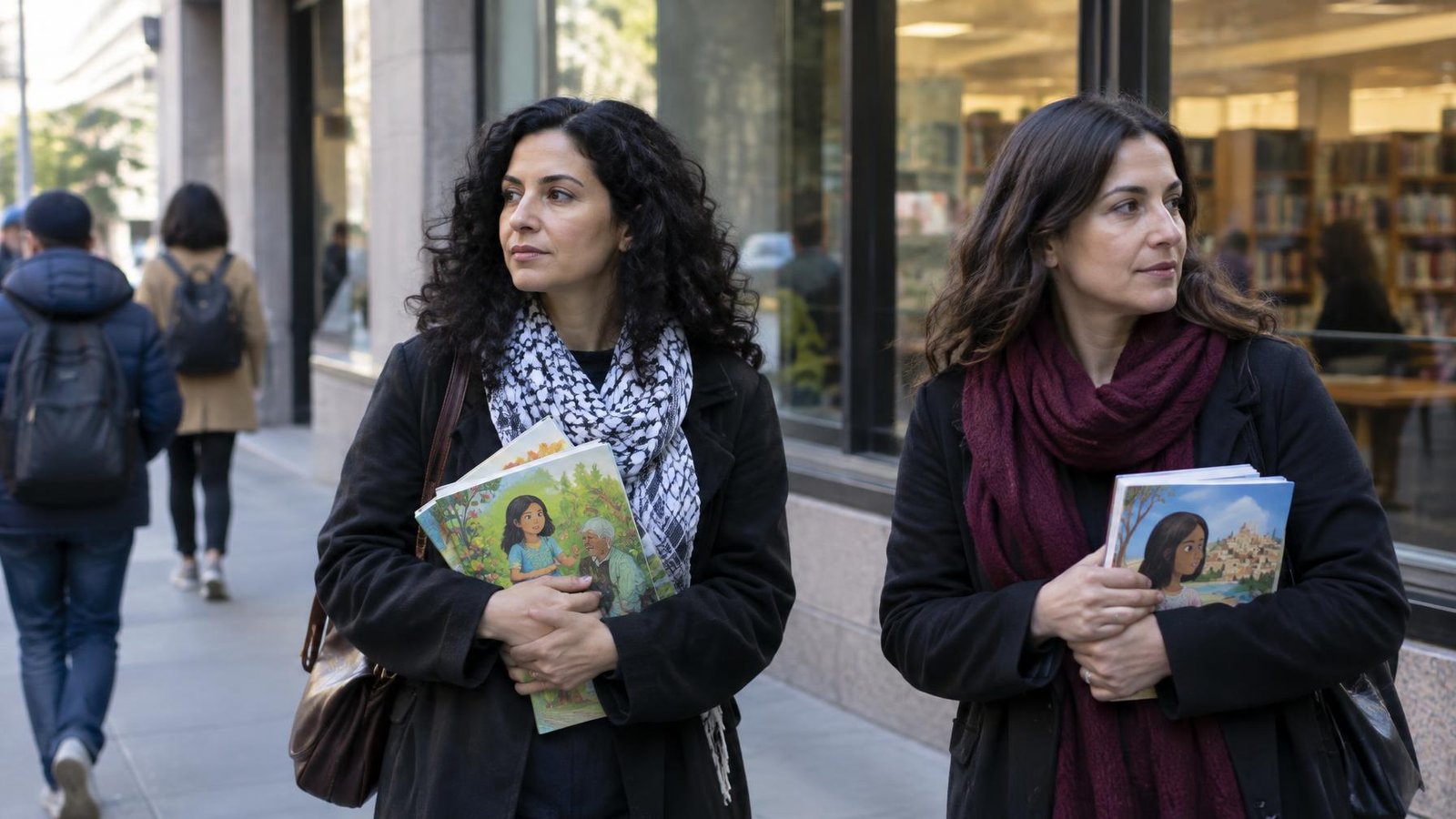
A children's book about a girl tending her grandfather's garden. A YA novel where a kid eats a magic olive and lands in her family's ancestral village. That's what got pulled from the Los Angeles Public Library's December calendar — and it's why two authors are now suing the city.
Jenan A. Matari and Nora Lester Murad filed a state lawsuit on September 28 against the City of Los Angeles, alleging anti-Palestinian discrimination, free speech violations, and breach of contract. Both had been invited by LAPL's teen council to speak via video call on December 6 as part of the library's Read Palestine Week programming. Matari was set to discuss Everything Grows in Jiddo's Garden; Murad, Ida in the Middle. On December 3, three days before the event, a staffer emailed to say library administration had canceled it. No reason given.
Here's the part every author with a venue contract should sit with: the authors say their agreement promised a conflict-resolution meeting if problems arose. They asked for one right away. Silence. They asked twice more. Still nothing. Meanwhile, the lawsuit cites an internal email — reportedly representing a group of Jewish library staff — accusing the two authors of ties to terrorism and calling them unsafe to host. The authors learned about that email only after the cancellation.
What happened next is the part worth noticing if you're wondering whether speaking up does anything. More than 100 LAPL librarians and support staff signed a letter condemning the cancellation. A public petition drew 7,000 letters demanding the library take a stand against anti-Palestinian censorship. The National Coalition Against Censorship, the ACLU of Southern California, the Authors Guild, and Palestine Legal all issued public statements urging reinstatement. According to Murad, none of it got a response from LAPL either.
That's the pattern here, and it's the one to watch: not just the cancellation, but the total non-response to every formal channel the authors tried first — the contractual meeting, the public pressure, the professional organizations weighing in. The lawsuit only came, Murad said, because they'd run out of other options.
Matari put the stakes plainly: this happened at one of the largest library systems in the country, funded by taxpayer money, and she worries it sets a precedent for what's permissible against Palestinian authors elsewhere. She's already had two bookstore events and a New York library appearance canceled around the same period.
What this means for you: if your speaking contract has a dispute-resolution clause, that clause is not decoration — it's your first line of defense, and ignoring it is apparently what institutions do when they'd rather avoid a hard conversation than have one.
LAPL has not commented, citing pending litigation. Watch for the city's response filing — that's where we'll learn what "no reason given" actually meant.
Why it matters to you: Authors who sign library or festival contracts with dispute-resolution clauses now have a live case testing whether those clauses are enforceable when a venue cancels under internal pressure.
This story ran in the Coral Wire edition of Sat, Oct 3 2026, when the Coral Index stood at 62/100 (Tailwinds building).
Coverage — 1 source
Every outlet found reporting this story.
Also in this edition
- Amazon slashes KDP upload limit from ten titles to twoPlatform — The cap, effective Monday September 21, applies per format per week with no exceptions for reverted rights or backlists
- Appeals court hands Thomson Reuters first federal AI copyright winLegal — The 3rd Circuit rejected Ross Intelligence's fair use defense but said its reasoning may not stretch to generative AI tools like Claude or ChatGPT
- AI company settles copyright suit against MicrosoftLegal — The case ends in a deal rather than a ruling, so the legal questions at its core go untested
- Tariffs and plant closure push books past pub dateMarket — Josh Silver's Fruit Fly and Marlon James's The Disappearers are among the titles caught in a fall supply squeeze.
- InkShares founder explains crowdfund-to-Hollywood pipelineMarket — Adam Gomolin points to The God in the Shed topping 100,000 units as proof the preorder model can find writers traditional houses pass on
- Massachusetts signs book-ban firewall after year-long author pushLegal — The law leans on Rhode Island's year-old S.0238 as its blueprint and limits challenges to school staff, caregivers, and students
- Sold becomes the most challenged book amid bansLegal — Author Patricia McCormick's publisher has built a revised educator guide and 20th-anniversary video to keep the title in classrooms.
- Audible adds AI chat features starting with Dracula spinoffPlatform — The beta starts with Audible Originals, letting listeners talk to a generative-AI version of Renfield from a Dracula adaptation this fall.